“Winning a Grand Slam or the Paralympic Games is really special, but you go to a different city and win out there. In my own city it’s totally different.”
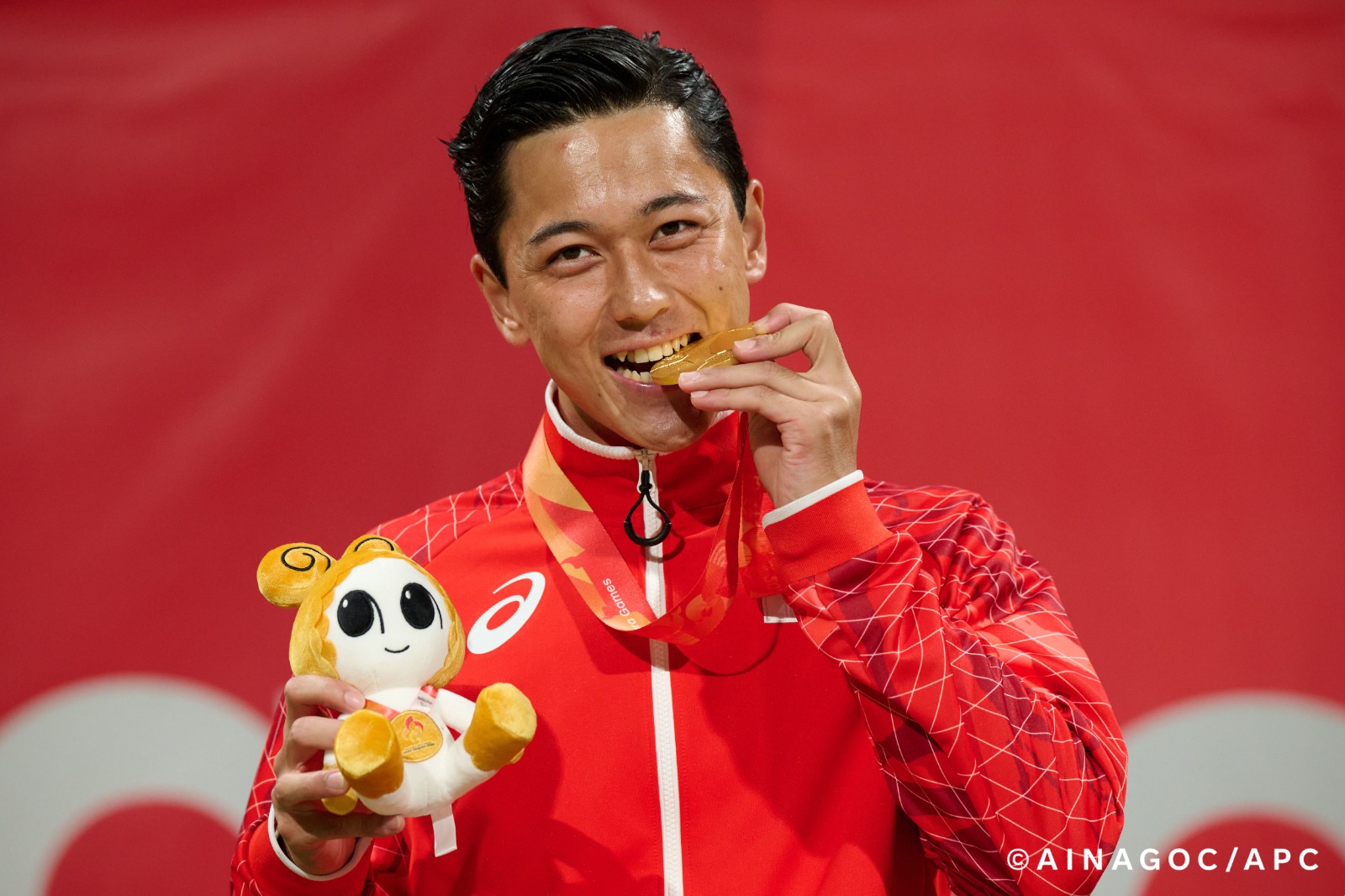
For Japan’s wheelchair tennis sensation Tokito Oda, winning gold at the Aichi-Nagoya 2026 Asian Para Games was unlike any of the major titles he had celebrated before.
The world No. 1 has won Grand Slam titles on some of tennis’s biggest stages and claimed Paralympic gold at Paris 2024. But lifting a trophy in front of family, friends and home supporters in the city where he was born carried a different emotion.
Oda defeated China’s Ji Zhenxu 6-2, 6-2 in the men’s singles final at the Higashiyama Park Tennis Center, completing a memorable homecoming at his first official tournament in Nagoya City.
“It’s very, very special, because I was born in this city and I grew up in this city. It’s been 10 years since I decided to start wheelchair tennis. Now I’m here as the world No.1, and I’m the main guy at the tournament, so I feel like I’ve done it in these 10 years,” Oda said.
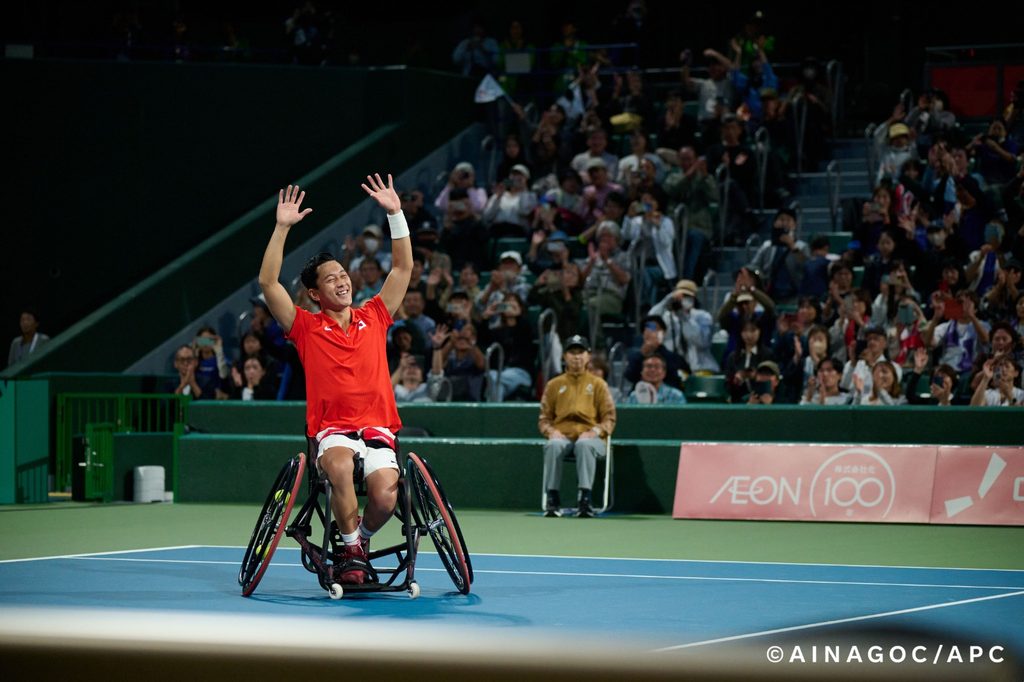
A decade-long journey
Ten years ago, Oda was a young boy beginning his journey in wheelchair tennis. Today, he is one of the sport’s biggest stars, a Paralympic champion and the world’s top-ranked player.
His rise has been remarkable, but the opportunity to compete in front of supporters from Aichi Prefecture gave this title a significance beyond his achievements on the international circuit.
The 2026 season had already brought him three Grand Slam titles, at the Australian Open, French Open and Wimbledon. A defeat at the US Open, however, denied him the chance to complete a clean sweep of the year’s four majors.
“I did really well this year. It was definitely a mighty year. I’m still (world) No.1, and I’m looking forward to finishing the year as No.1,” he said.
“Even what happened at the US Open was really hard and really painful, because it was the one last thing left and I lost it. I was missing the last one (Grand Slam event). I’d been saying I was going to bring all the titles back to Nagoya, but I only have three, and one is missing.”
Yet, on the court where so many home supporters had gathered to watch him, Oda found another reason to celebrate.
“But I think I showed my best tennis today. Almost everybody here was from Aichi, so I’m really happy.”
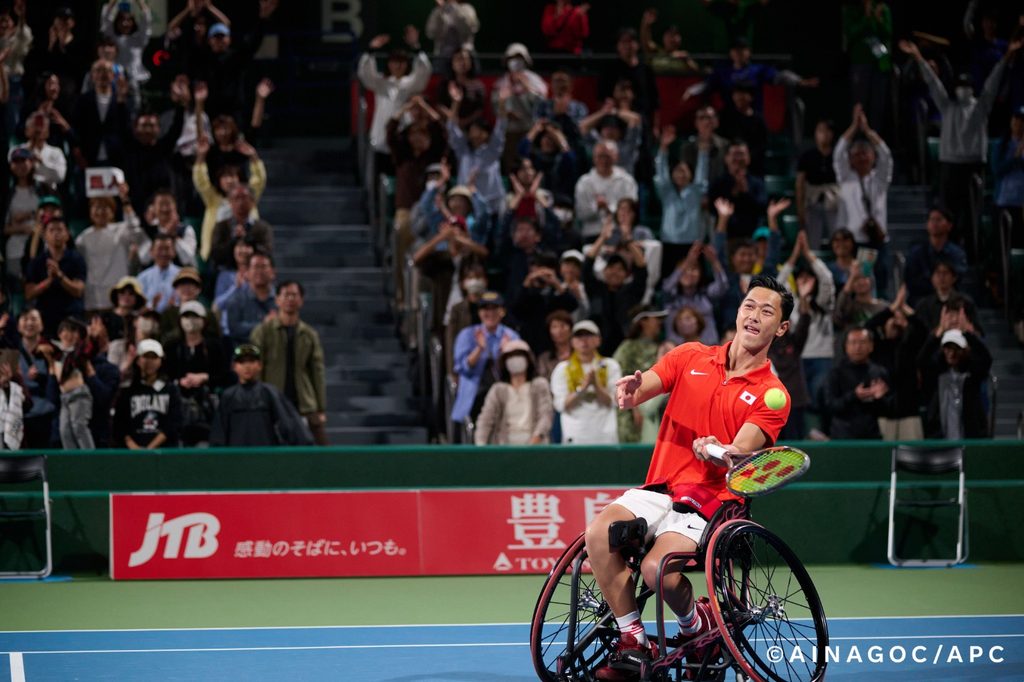
When the crowd gave Oda strength
Oda is accustomed to playing before large crowds, but the atmosphere at Higashiyama Park Tennis Center offered something he had never experienced in an official tournament.
For an athlete who hopes his performances inspire others, the roles were reversed as the home crowd cheered him towards gold.
“Usually, I want to give power and hope to all the fans, to everybody. But today it was different. They gave me power. I felt like they were the ones giving me power, so I’m just really happy.”
The straight-sets victory was another demonstration of the quality that has taken Oda to the top of wheelchair tennis. But it was the connection with the spectators that made the occasion unforgettable.
“It was a fresh feeling for me, because I’d never played an official tournament in Nagoya,” he said.
A victory with a lasting legacy
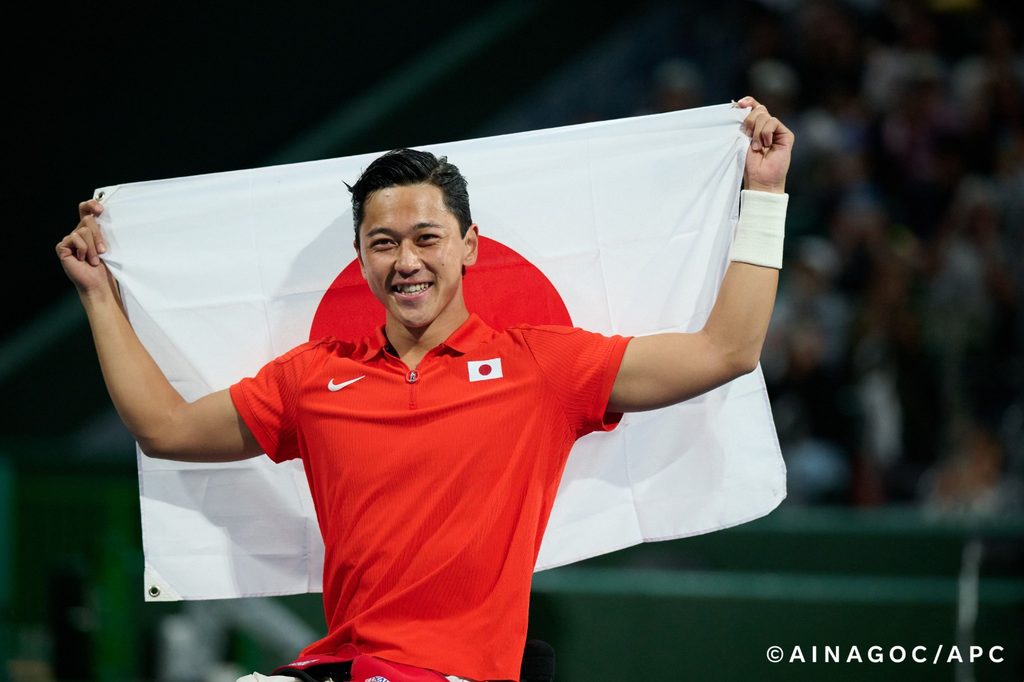
Beyond his own success, Oda hopes his homecoming can encourage more people to follow wheelchair tennis and bring further international tournaments to Nagoya City and Aichi Prefecture.
“So, I hope this tournament keeps growing, and that other tournaments keep coming to this city too. I hope all the fans will come and enjoy it again if I play in Nagoya. I’m looking forward to the future.” For Oda, the Asian Para Games gold medal may not carry the same global prestige as a Grand Slam or Paralympic title. But the chance to celebrate it in the place where his journey began has given him a memory that will stand alongside his greatest achievements.