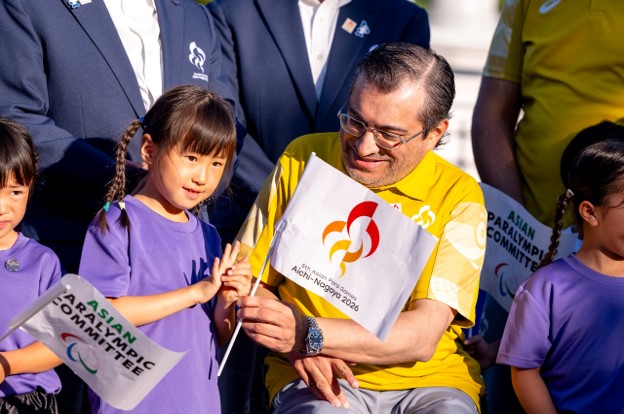
Asian Paralympic Committee President Majid Rashed wants the conversation around Asian Para sport to begin with performances, not disabilities.
Rashed has spent over three decades in Para sport, first as an athlete, now as the administrator overseeing its regional showpiece. The Aichi-Nagoya 2026 Asian Para Games, which run from October 18-24, will bring 2,700 athletes from 45 National Paralympic Committees together for the first time across 18 sports.
His argument is straightforward. Asia’s Para athletes have reached a level where ‘what they do should be the story’.
“When I began as an athlete, much of the conversation was about what people with disabilities could not do,” Rashed said in an interview with the Asian Paralympic Committee. “Today we are discussing world records, professional preparation and marginal gains in performance. That is an enormous change. The athlete is increasingly coming before the disability.”
Performance first
China won 94 gold medals at the Paris 2024 Paralympics, topping the medal table for the sixth consecutive Games. Rashed says expectations have changed.
“It changes expectations,” he said. “We no longer go to a Paralympic Games simply hoping Asian athletes will compete well. In many sports, they are arriving expecting to win. That creates role models, but more importantly it raises standards for the athletes who follow them.”
Asked about Sheetal Devi, the 19-year-old Indian archer and reigning world champion and world No. 1 in compound women’s category, Rashed pointed to her results rather than her story.
“Sheetal is inspirational, but we should not stop at inspiration. Look at her scores. Look at her consistency and what she has achieved against the best archers in the world. That is elite performance. The real progress comes when people stop being surprised that a Para athlete can do something and start discussing whether she can win the competition,” he affirmed.
Building on Tokyo Japan staged the Tokyo Paralympics five years ago, and Rashed sees an opportunity to build on Tokyo’s legacy rather than start again. The harder part, he argues, is what happens after the closing ceremony.
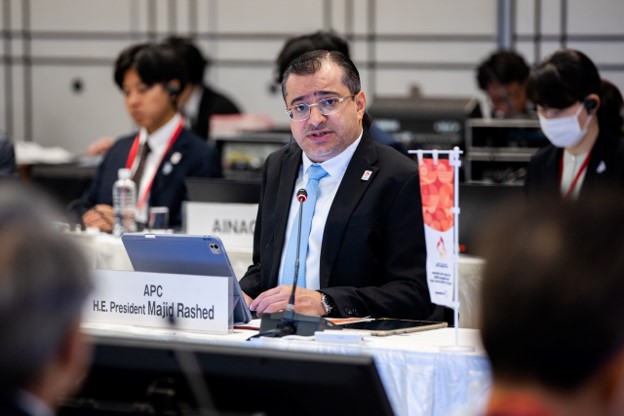
“Tokyo 2020 changed perceptions of Para sport in Japan and across Asia. Aichi-Nagoya has the opportunity to build on that rather than start again. Japan understands what is required to stage elite Para sport, but the bigger challenge is ensuring that the impact continues after the last medal has been awarded,” Rashed added.
His benchmark for success is deliberately not a medal table. Rashed asserted, “A successful Asian Para Games cannot be measured only by records and medals. The Games should leave behind greater accessibility, greater participation and a different understanding of what people with disabilities can contribute to society.”
Accessibility, in his view, is not an add-on. “Accessibility is not an additional service at a Para Games; it is fundamental to the event. And it goes beyond ramps and venues. It includes transport, accommodation, information, technology and the ability of athletes and spectators to move through the city independently.”Uneven opportunity
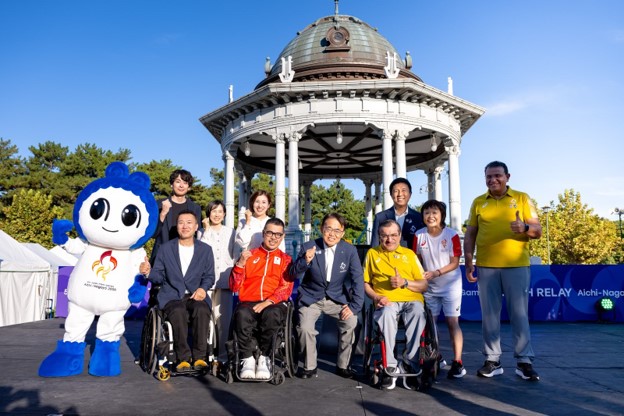
Rashed is equally clear that the depth at the top of Asian Para sport has not reached every country. Some nations run sophisticated programmes while others are still trying to identify athletes and provide basic access to coaching and competition. The APC’s responsibility, he said, is to narrow that gap.
“Talent does not only exist in countries with money. Somewhere in Asia there may be a future Paralympic champion who has never had access to a coach, equipment or even the opportunity to try a sport. That is what concerns us. Development must mean creating a pathway from discovering an athlete to coaching, competition and ultimately the international stage, said Rashed.
The starting point is identification. Rashed described communities where children and young people with disabilities may not even know sport is an option for them. The first chance, he said, can change a life, and occasionally uncover a champion.
“You cannot develop an athlete you never find. The first opportunity can change someone’s life, but it can also uncover extraordinary sporting talent.”
Coverage that treats them as athletes
Part of the responsibility, in Rashed’s view, sits with the media. He wants coverage that analyses performance the way any other elite sport is covered.
“We must move beyond covering Para athletes only because their personal stories are inspirational. Tell those stories, certainly, but also analyse their performances. Discuss tactics, rivalries, records and pressure in the same way we do in any other elite sport. When that happens consistently, Para sport will no longer need to ask for special attention.”
The Road to Los Angeles
With the Los Angeles 2028 Paralympics two years out, Rashed sees Aichi-Nagoya as an opportunity for athletes to assess their progress. Many of the athletes competing here already rank among the best in the world, so the results will say as much about the global picture as the continental one.
“For many athletes, this will be an important step towards Los Angeles. It will show where they stand against the best in Asia and where improvements are required.” His measure of a successful Games does not begin with records. “Of course I want full venues, outstanding performances and a well-organised Games. But I would also like a young person with a disability watching somewhere in Asia to see these athletes and think, ‘There is a place for me in sport.’ If Aichi-Nagoya creates that opportunity for the next generation, that will be a legacy worth having.”