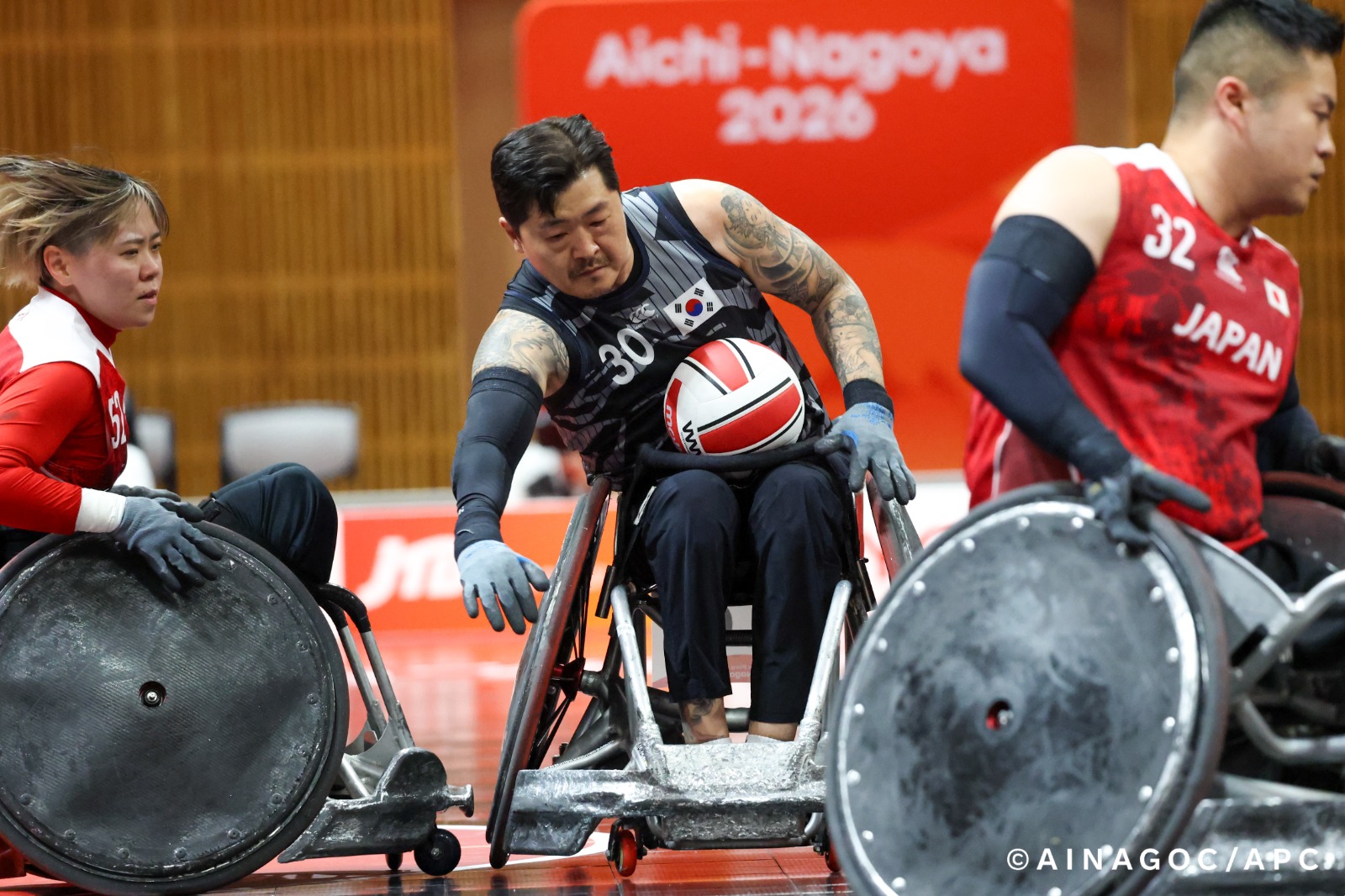
For 12 years, the Republic of Korea had waited for another shot at Asian Para Games wheelchair rugby gold. When the opportunity finally arrived on Friday, they made sure it did not slip away.
Korea stunned world No. 1 and reigning Paralympic champions Japan 53-50 in a gripping final at the Wing Arena Kariya, turning the tables on the team that had beaten them in the gold medal match at Incheon 2014.
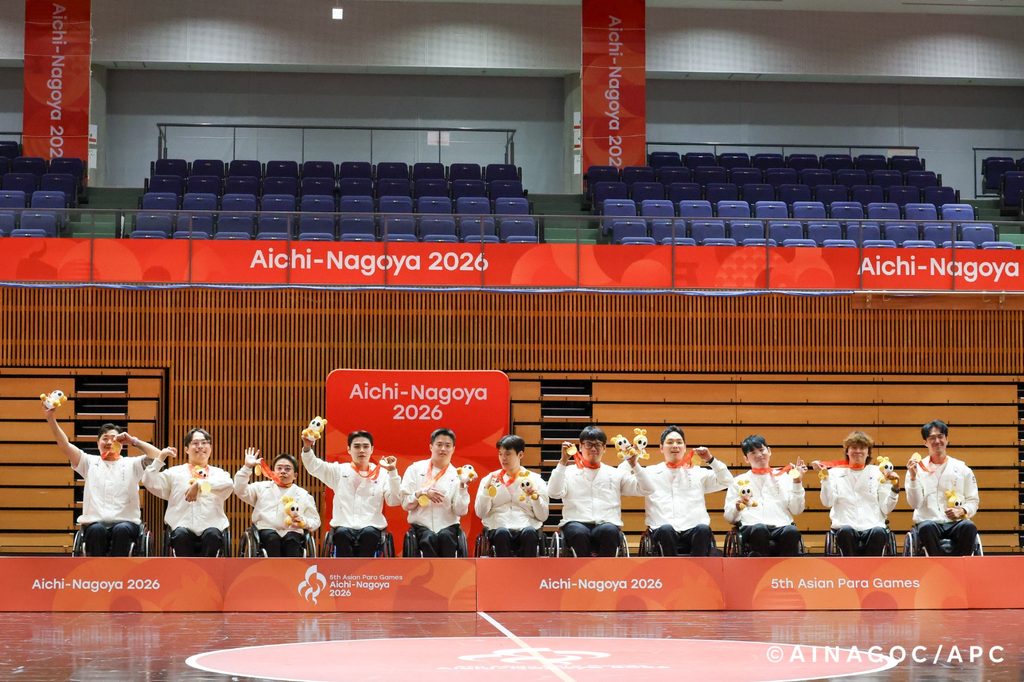
As the final seconds ticked away, Korean captain Lee Seonghui held firmly onto the ball, knowing the contest was won. When the whistle sounded, he tossed it high into the air, setting off celebrations among his teammates.
“Oh yeah, it felt like I was flying away somewhere,” said Lee, who scored 18 tries.
“I knew there were only a few seconds left as I had the ball and we had won. We’ve made history. Japan have great players so to beat them here is just fantastic.”
Korea Find Another Gear In Final Quarter
The contest remained finely balanced for much of the evening, with Japan’s Katsuya Hashimoto almost single-handedly keeping the hosts in contention.
The 24-year-old produced an extraordinary 30 tries, repeatedly bursting through Korea’s defence with his speed and wheelchair control, much to the delight of the near-capacity crowd.
But Korea had their own match-winner in Park Ucheol, who crossed the line 27 times, while Lee contributed another 18.
The decisive passage came early in the fourth quarter. Sensing Japan were beginning to tire, Korea Stepped up the pressure and scored three tries in just 90 seconds to open a five-try advantage.
Lee said the tactical adjustment made all the difference.
“we changed our plan and tactics as i could see that the japanese players looked a little bit tired and were a bit slow,” he explained. “so we upped our game.”
Japan tried to fight back, but korea protected their lead and held on for a famous victory.
Hashimoto Left To Ponder Japan’s Future
For Hashimoto, the disappointment was difficult to hide.
Despite his remarkable individual performance, Japan’s relatively inexperienced squad could not match the Koreans when the contest reached its crucial stages.
“I am very sad. It’s very disappointing but that’s the level of our team now,” the Japanese captain admitted.
“I know I’m a good player but we have to get stronger and stronger with the new team that is coming through.”
Twelve Years Later, A Different Ending
Wheelchair rugby returned to the Asian Para Games in Aichi-Nagoya after a 12-year absence, having made its debut at Incheon 2014.
On that occasion, Japan defeated Korea in the final. This time, the Koreans arrived determined to change the outcome.
They had already beaten Japan twice during the preliminary round and completed a remarkable hat-trick of victories over the world’s top-ranked side when it mattered most.
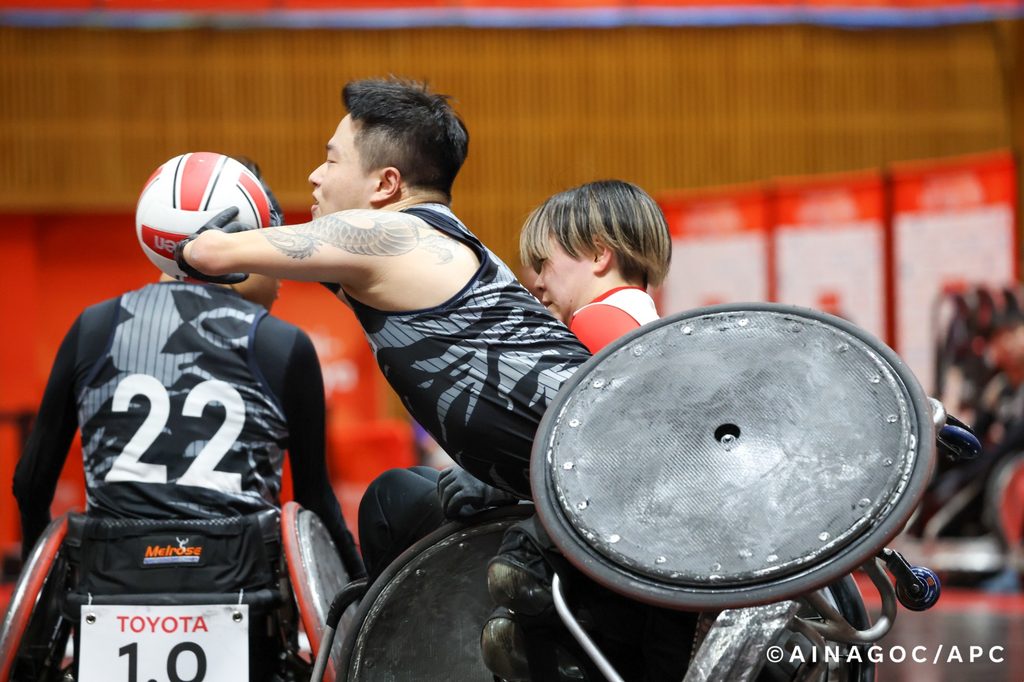
Thailand, the third team in the competition, finished with bronze despite losing all their matches. For Korea, however, this was about more than a gold medal. It was a long-awaited reversal of the Incheon result, achieved against the Paralympic champions on their home court. And for Lee, who held the ball as the clock ran down, it was a moment worth waiting 12 years for.