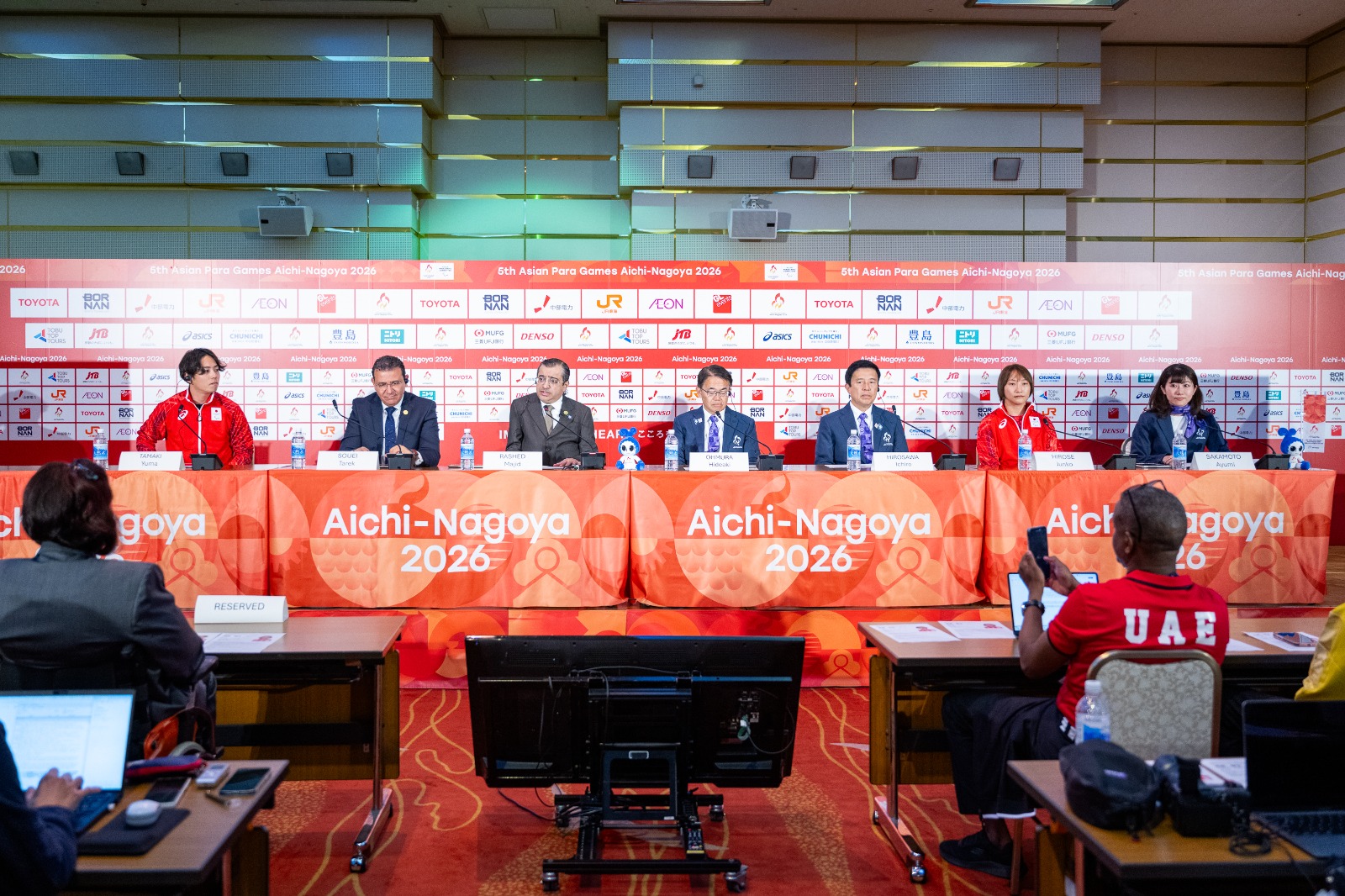
There was a moment during Saturday’s joint press conference by the Asian Paralympic Committee (APC) and Aichi-Nagoya Asian Para Games Organizing Committee (AINAGOC) when APC President HE Majid Rashed decided that words alone were not enough to explain the importance of accessibility.
He moved his electric wheelchair towards one end of the dais, where there was no ramp. He stopped. There was no way down.
He then turned and drove towards the other end, where a ramp provided the access he needed. After demonstrating the difference, he returned to his place alongside the other dignitaries – Mr. Tarek Souei, APC CEO; HE Hideaki Ohmura, AINAGOC President; Ichiro Hirosawa, Deputy President; Junko Hirose, Paralympic gold medalist (Para Judo) and Yuma Tamaki (Para Athletics). His message was simple, but powerful.
Without that ramp, he explained, he would not have been “sitting among the distinguished guests” on the dais. He would have been somewhere below, unable to take his place alongside them.
For a few moments, accessibility was no longer an abstract discussion about infrastructure, policies or promises. It was about something far more basic, the opportunity to be present, to participate and to be treated as an equal.
And that, perhaps more than anything else, captured what the Aichi-Nagoya 2026 Asian Para Games hopes to achieve beyond the medals and sporting performances.
Japan Turns Its Vision of Inclusion Into Action
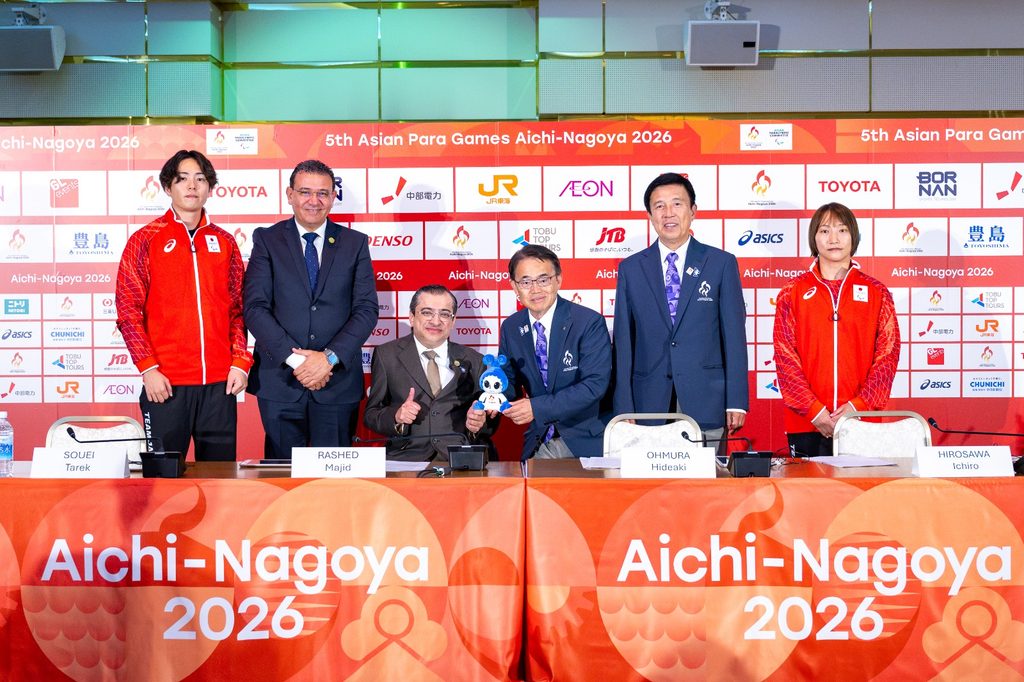
For AINAGOC President Ohmura, accessibility has been central to preparations rather than an afterthought.
Working with the athletes’ committee, organisers have introduced accessible toilets, ramps, modified beds and additional wheelchair space in accommodation facilities.
Competition venues have also undergone improvements, including wheelchair seating, barrier-free spectator walkways and renovated changing rooms.
“We worked with the athletes’ committee members on these measures so that para athletes can rest properly and give their best performances,” Ohmura explained.
The changes are intended to benefit not only athletes competing at the Games but also spectators and future users of the facilities.
“With the slogan ‘Imagine One Heart’, we want to make these Games an opportunity for social change that goes beyond differences in nationality, culture and disability,” Ohmura said.
A Games That Promises More Than Sporting Glory
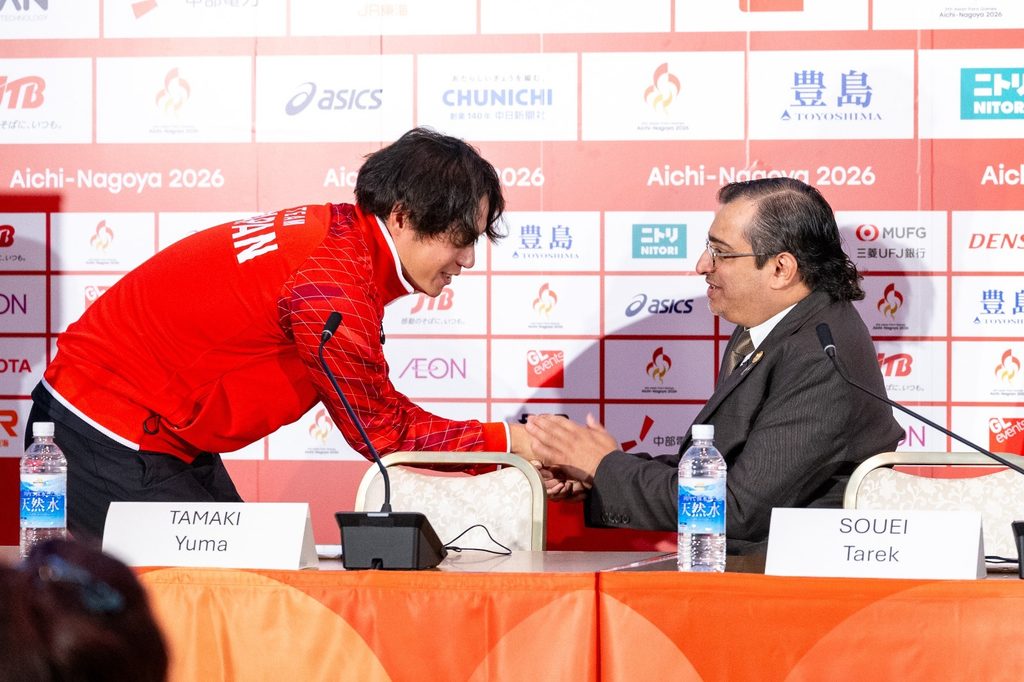
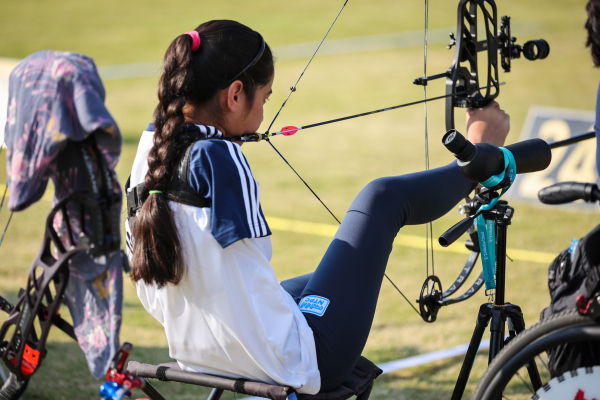
With more than 2,700 athletes, 1,300 team officials and 492 medals across 18 sports, Aichi-Nagoya 2026 is Asia’s biggest para sporting event.
For the first time in Asian Para Games history, all 45 nations are represented, a milestone Rashed believes reflects the growing strength of the Paralympic movement across the continent.
“The Aichi-Nagoya 2026 Asian Para Games is a moment that promises to create a lasting legacy for Japan and the Paralympic movement across Asia,” Rashed said.
The Games also mark Japan’s biggest para sporting event since Tokyo 2020, when pandemic restrictions prevented spectators from supporting athletes in person.
“But this time we are excited to see the stands filled with cheering fans and families celebrating the athletes,” he added.
Japan has entered 284 athletes, hoping to build on the country’s 41-medal performance at the Paris 2024 Paralympics.
One Heart, One Vision for Asia
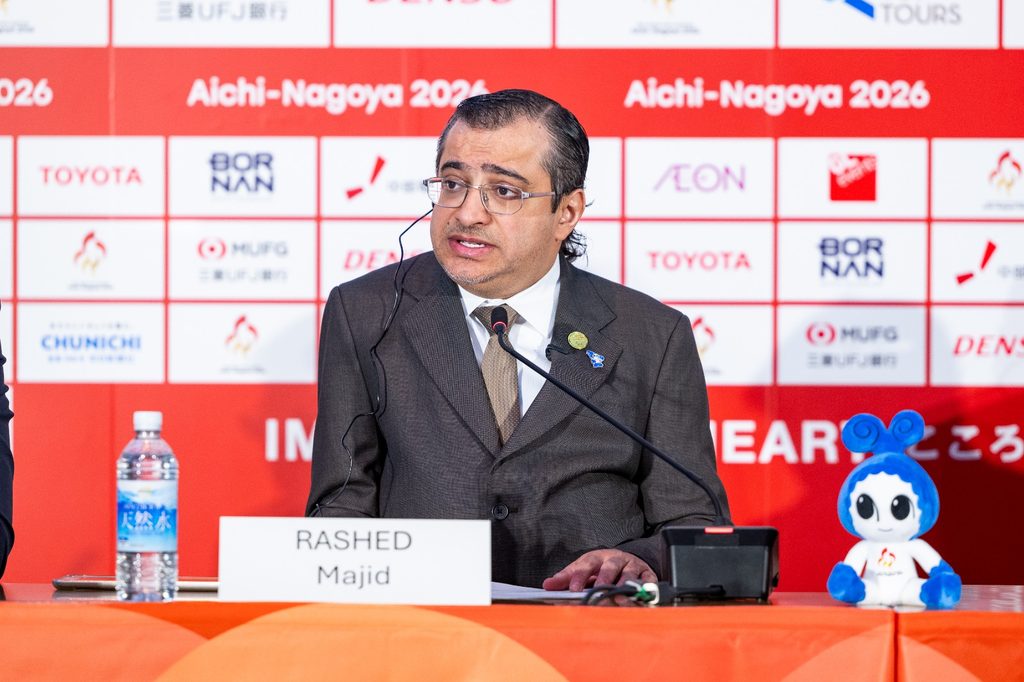
Rashed believes the Games can bring together people from different cultures, languages and backgrounds while strengthening the bonds within Asia’s Paralympic community.
“One heart, one vision. It’s not just the words we share in the press conferences or meetings,” he said.
He praised the warmth and hospitality of Nagoya’s residents, saying visiting delegations already felt they were in a second home.
The APC President also welcomed the return of wheelchair rugby after a 12-year absence, with Japan arriving as the reigning Paralympic champions.
Looking beyond the competition, Rashed outlined plans to strengthen the APC’s network of centres of excellence, creating more educational and development opportunities for young athletes, coaches, classifiers, referees and administrators.
A Legacy That Must Outlive the Games
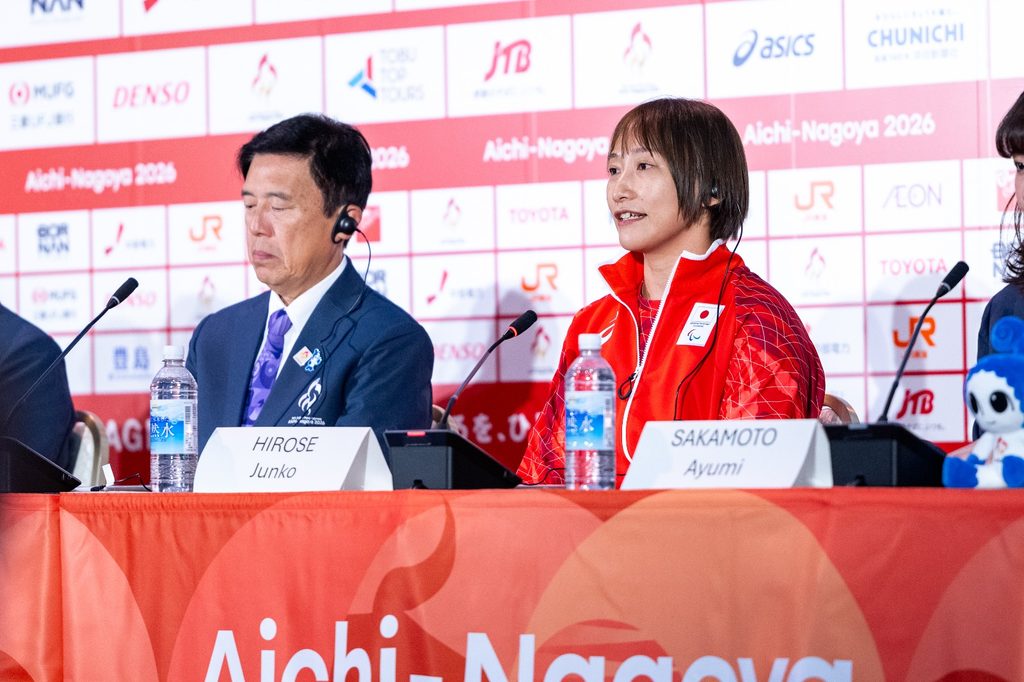
For both Rashed and Ohmura, the real success of Aichi-Nagoya 2026 will not be measured solely by medals or records.
“We are all confident that Aichi-Nagoya 2026 will not only deliver outstanding sporting performances but also leave a lasting legacy of accessibility, inclusion and para sport development in Japan and Asia,” Rashed said.
His demonstration at the press conference had already made that ambition clear. A ramp may seem like a small piece of infrastructure. But on Saturday, it illustrated the difference between being excluded and being able to take one’s rightful place. And that is the kind of change the Asian Para Games hopes to inspire long after the final medal has been awarded.