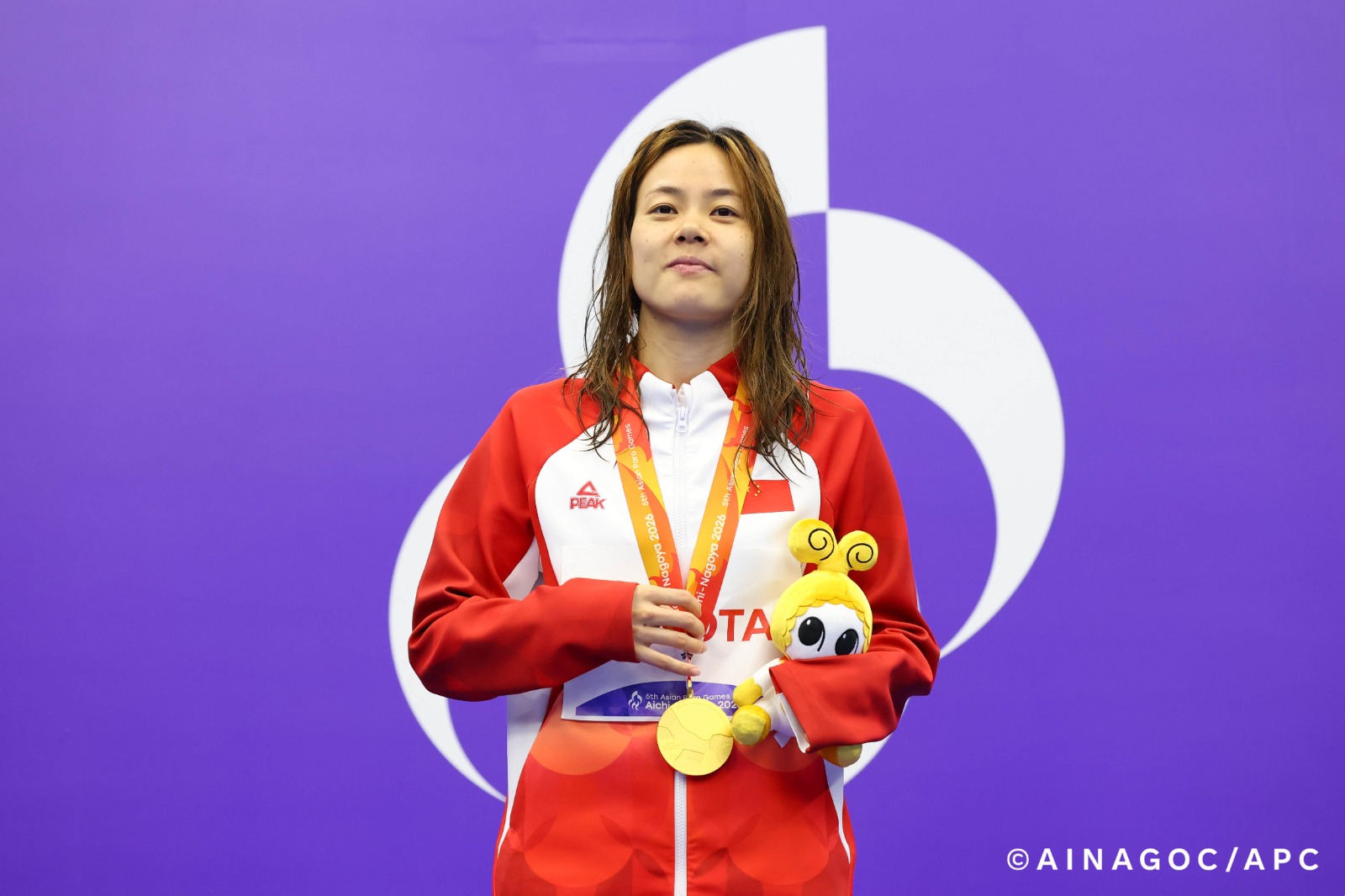
Eight events. Eight gold medals. Not a single trip to the podium without standing on its highest step.
By the time Zhang Meng emerged from the Rainbow Pool on Friday, there was little left for the Chinese swimmer to prove. She had swept through the Aichi-Nagoya Asian Para Games, winning everything she entered and leaving behind a remarkable display of versatility, endurance and sheer dominance.
Yet the 30-year-old was already looking beyond her extraordinary medal haul.
“I competed in eight swimming events over five days. I’m certainly delighted to have won eight gold medals, but I don’t think I’ve reached my limit yet,” Zhang told Chinese media.
The final flourish came in the mixed 4x100m freestyle 34 points relay, where Zhang helped China capture the last swimming gold of the Games in a Games-record time of 4:07.30.
For the swimmer from Qingdao, it was a fitting conclusion to a journey that began with a problem most swimmers never have to consider: how to stay balanced in the water.
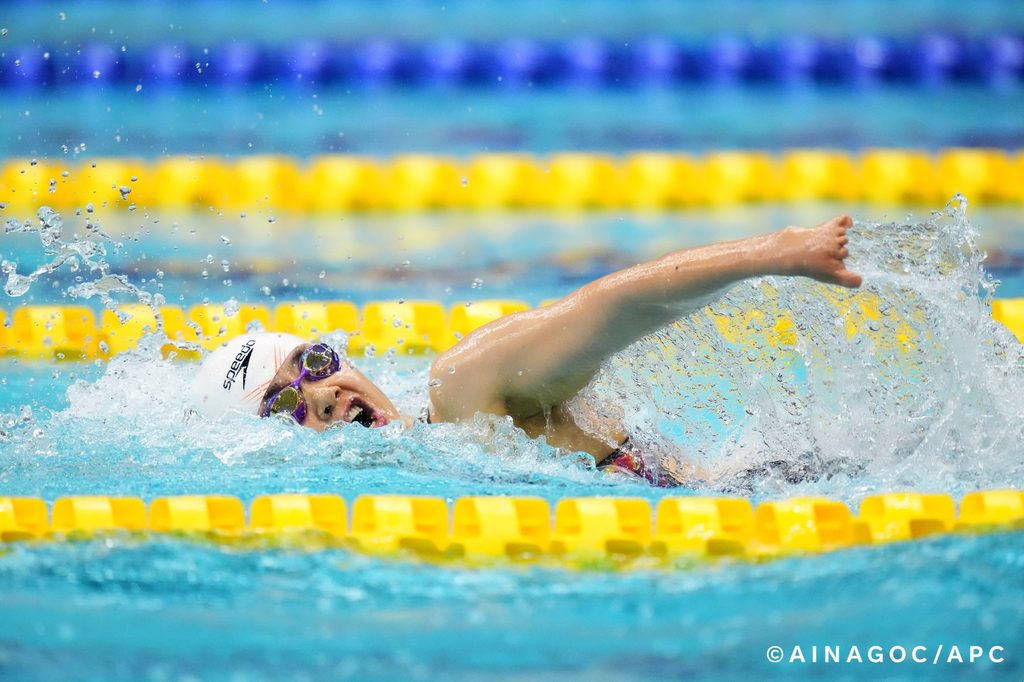
Eight Golds, Four Strokes, One Champion
Zhang’s dominance was not confined to one stroke or distance. She opened with gold in the women’s 100m freestyle S10 in 1:02.51, then added the 200m individual medley SM10, 100m backstroke S10, 100m butterfly S10 and mixed 4x100m medley relay titles.
Thursday brought two more golds, in the 100m breaststroke SB9 (1:15.81) and 50m freestyle S10 (28.77). After seven victories, she still had one final race to swim.
Her reaction to the 50m freestyle victory was almost casual. The result, she said, was “more or less what I had expected.”
Behind that composure, however, was a demanding week. Zhang had arrived in Nagoya nursing an inflamed tooth, and the relentless competition schedule left little room for recovery. She paced herself through five days of racing before helping China claim the final relay gold and completing her remarkable sweep.
The Swimmer Who Had to Find Her Balance
Long before the medals, Zhang had to master something more fundamental.
Born with a congenital deformity affecting her left palm, she faced difficulties maintaining balance in the water, where both hands play an important role in propulsion and body alignment.
Her coach at Qingdao’s para swimming team likened the challenge to a fish learning to swim without the full use of its fins. Zhang’s answer was to spend countless hours adjusting her stroke, refining her technique and finding a rhythm that worked for her body.
It was painstaking work, but the pool soon became much more than a training ground.
“I’m happiest when I’m in the pool. Swimming has become an indispensable part of my life,” she said in an earlier interview. The swimmer who once struggled to find her balance would eventually become one of China’s most formidable competitors.
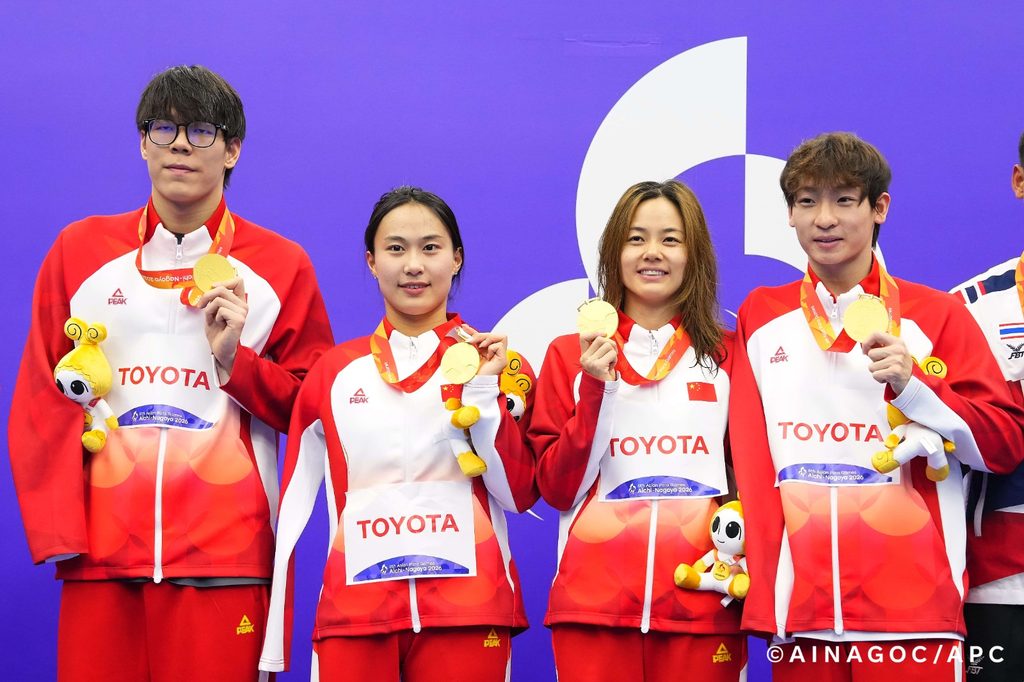
From London Bronze to Paris Glory
Zhang was just 16 when she announced herself on the Paralympic stage, winning bronze in the women’s 200m individual medley SM10 at London 2012.
But the road to gold proved far longer. She returned from Rio 2016 and Tokyo 2020 without a medal, enduring a frustrating wait for another Paralympic podium finish.
At the Hangzhou Asian Para Games in 2023, she collected four golds and four silvers, a reminder of her ability to compete across multiple events.
The breakthrough she had chased for 12 years finally arrived at Paris 2024. At her fourth Paralympics, Zhang won the 200m individual medley SM10 title and added silver in the 100m breaststroke SB9, setting an Asian record.
“Swimming makes me feel that my life has greater value. Not everyone gets to represent their country at the Paralympics, and I feel very proud,” she said during the Paris Games.
It was a deeply personal triumph for a swimmer who had spent years learning to make the most of every stroke.
Los Angeles Is Already Calling
Nagoya may have delivered the most emphatic medal haul of Zhang’s career, but she is already looking towards Los Angeles 2028.
Fourteen years after her Paralympic debut, she remains hungry to improve, with the eight-gold sweep offering further evidence of her extraordinary range across freestyle, backstroke, butterfly, breaststroke and individual medley.
The medals in Nagoya were a measure of how far she had come from those early struggles in the pool. But Zhang was in no mood to treat them as a finishing line.
Asked what was left to achieve after eight golds in five days, her answer was emphatic.
“I still have more to give!”
By ND Prashant for APC